
For the First Time in Kazakhstan: Rare Little Bustards Are Being Tracked Using GPS
A team of researchers from the Steppe Birds MOVE from the research centre BIOPOLIS, University of Porto (CIBIO), the Kyrgyz Association for Biodiversity Conservation "Ornithologia", the Public Foundation "Non-Governmental Ecological Foundation named after V.I. Vernadsky in the Republic of Kazakhstan" (Vernadsky Foundation), and the Public Foundation "Biodiversity Research and Conservation Center" (BRCC), alongside independent volunteers, participated in tagging the little bustard (Tetrax tetrax) with GSM-GPS transmitters—a first for science in Kazakhstan.
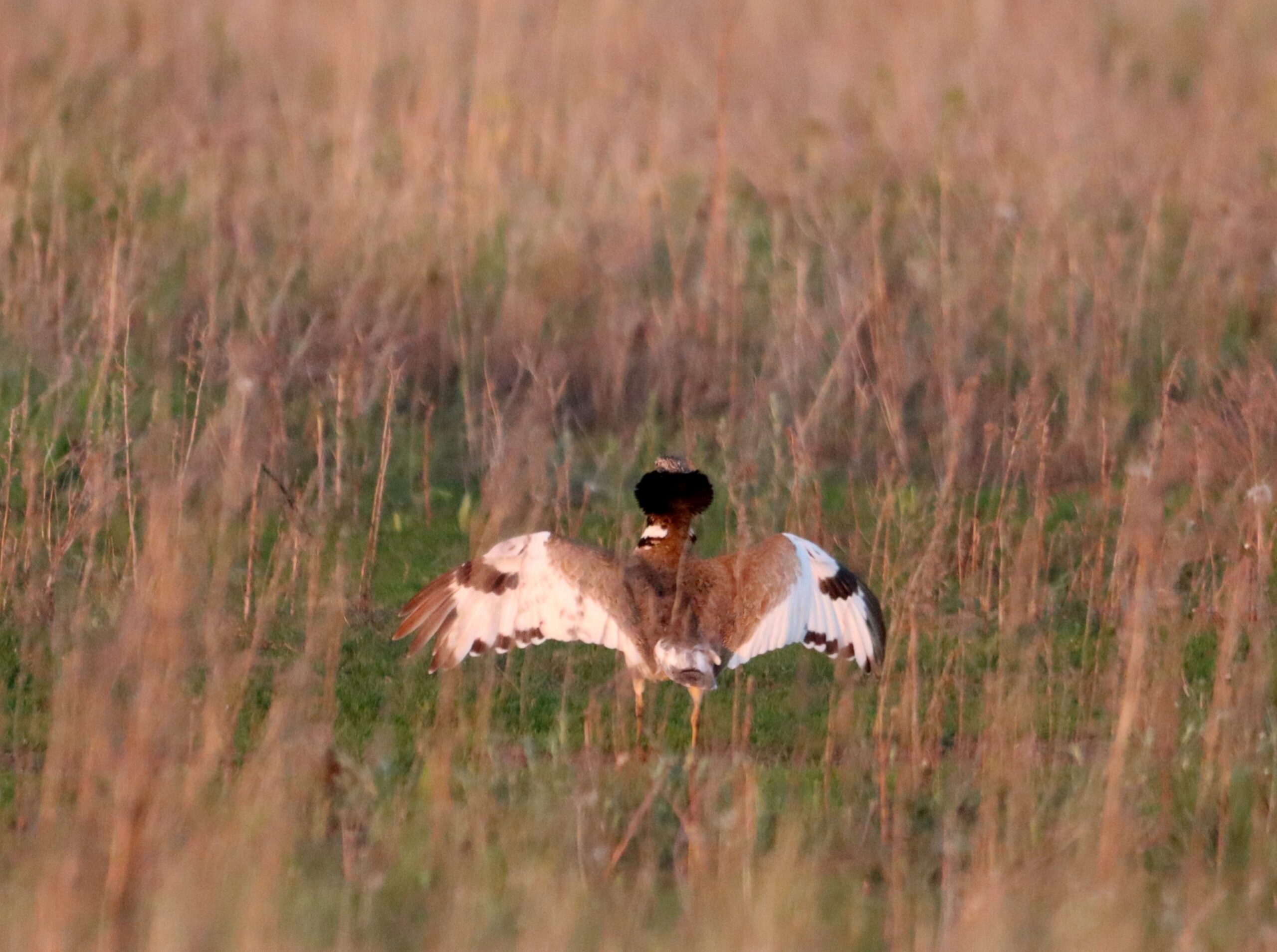
Male little bustard in mating display. Photo by N. Ongarbayev.
Representatives of the Akmola Regional Territorial Inspection of the Forestry and Wildlife Committee of the Ministry of Ecology and Natural Resources of the Republic of Kazakhstan also participated in this work.
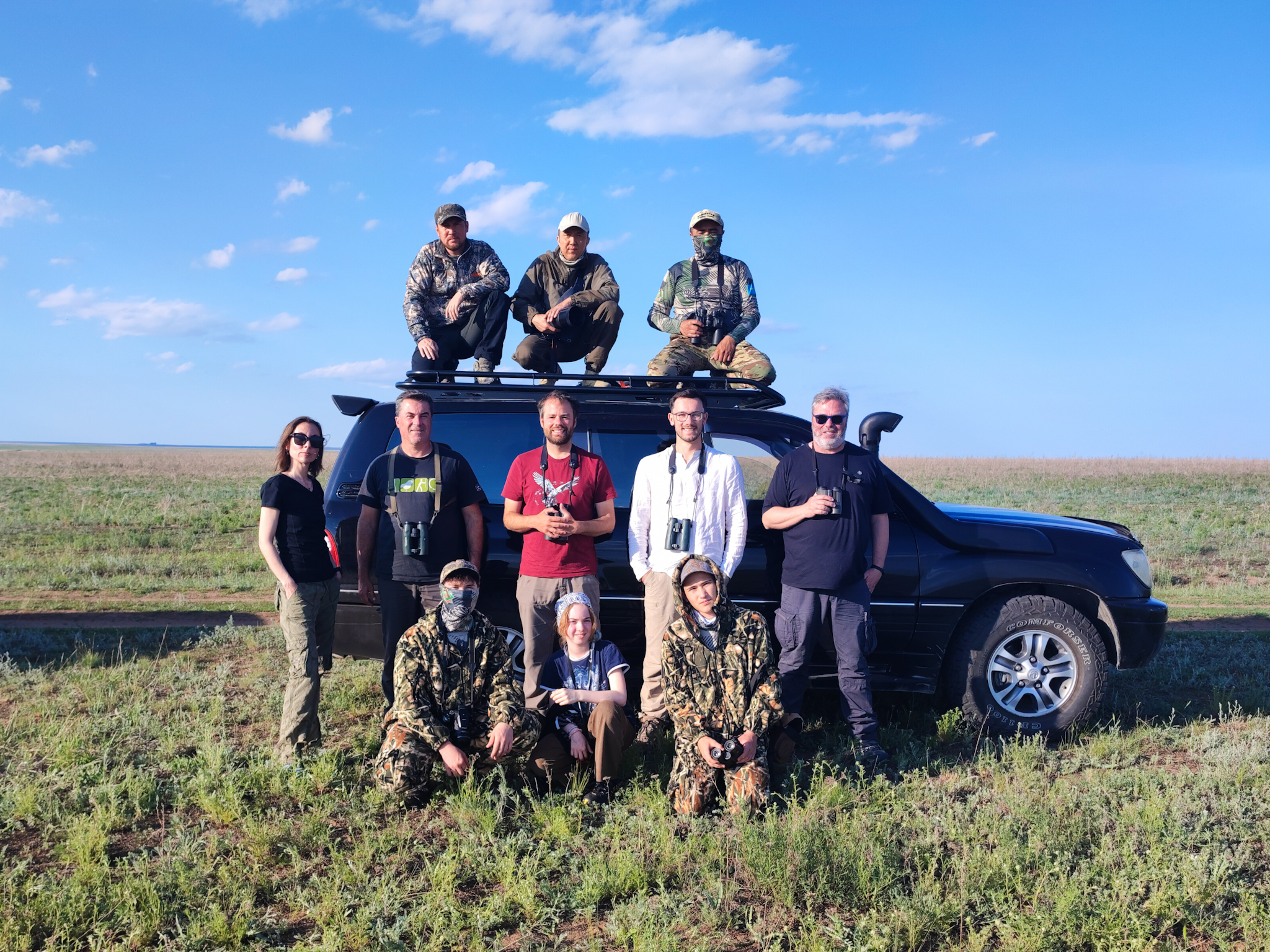
Research team. Author: G. Pulikova
The little bustard is a bird belonging to the bustard family Otididae. It is one of the smallest representative of the family, roughly the size of a chicken, and primarily inhabits steppe habitats. The little bustard is included in the list of rare and endangered animal species of the Republic of Kazakhstan and is classified as Near Threatened (NT) on the IUCN Red List.
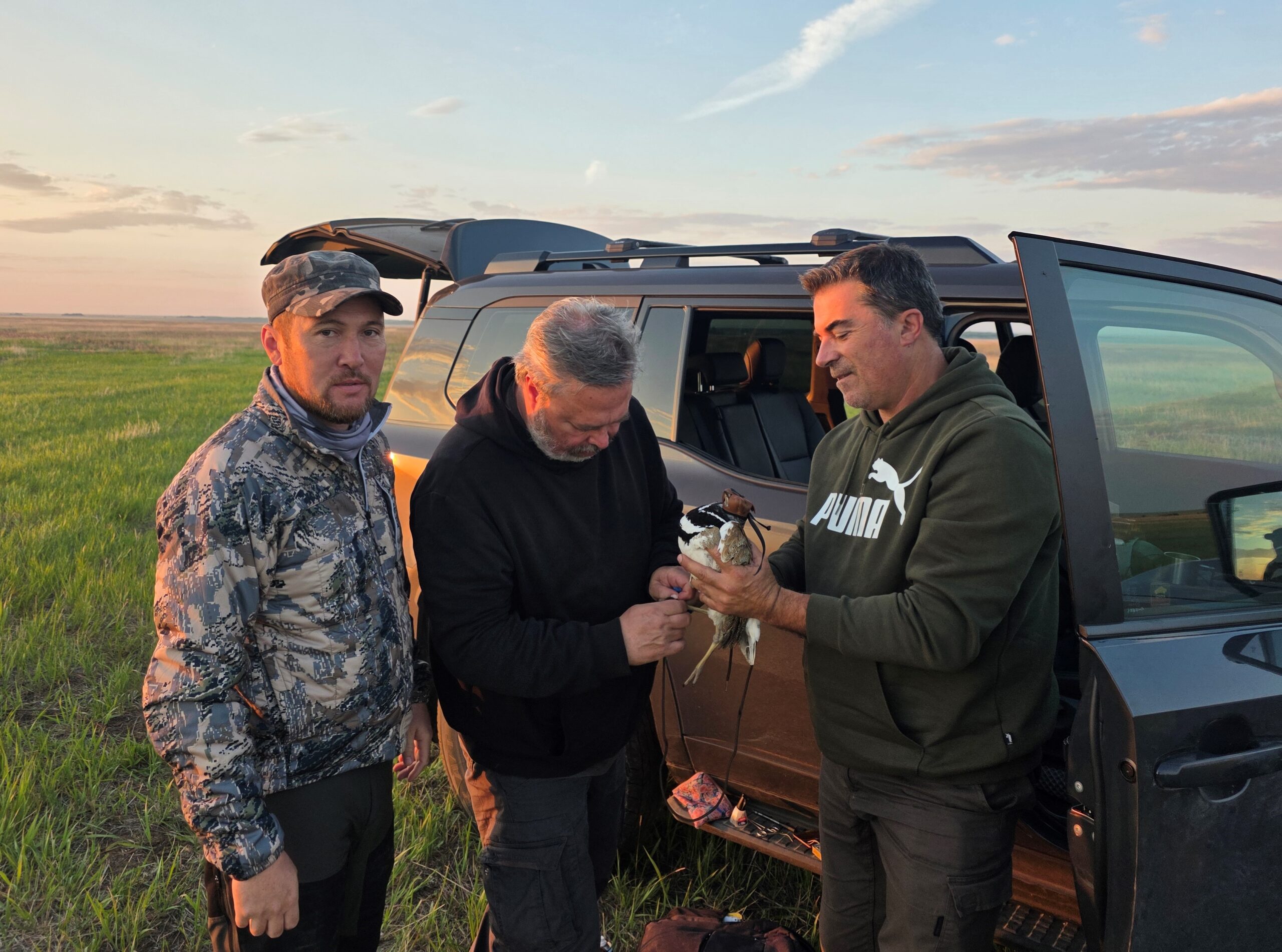
The first two males were tagged in the Akmola Region, 60 km from Astana. The researchers fitted the birds with "backpacks" carrying back-mounted GSM-GPS trackers and immediately released them into the wild. The tagged birds safely returned to their natural habitat and are already transmitting data on their movements.
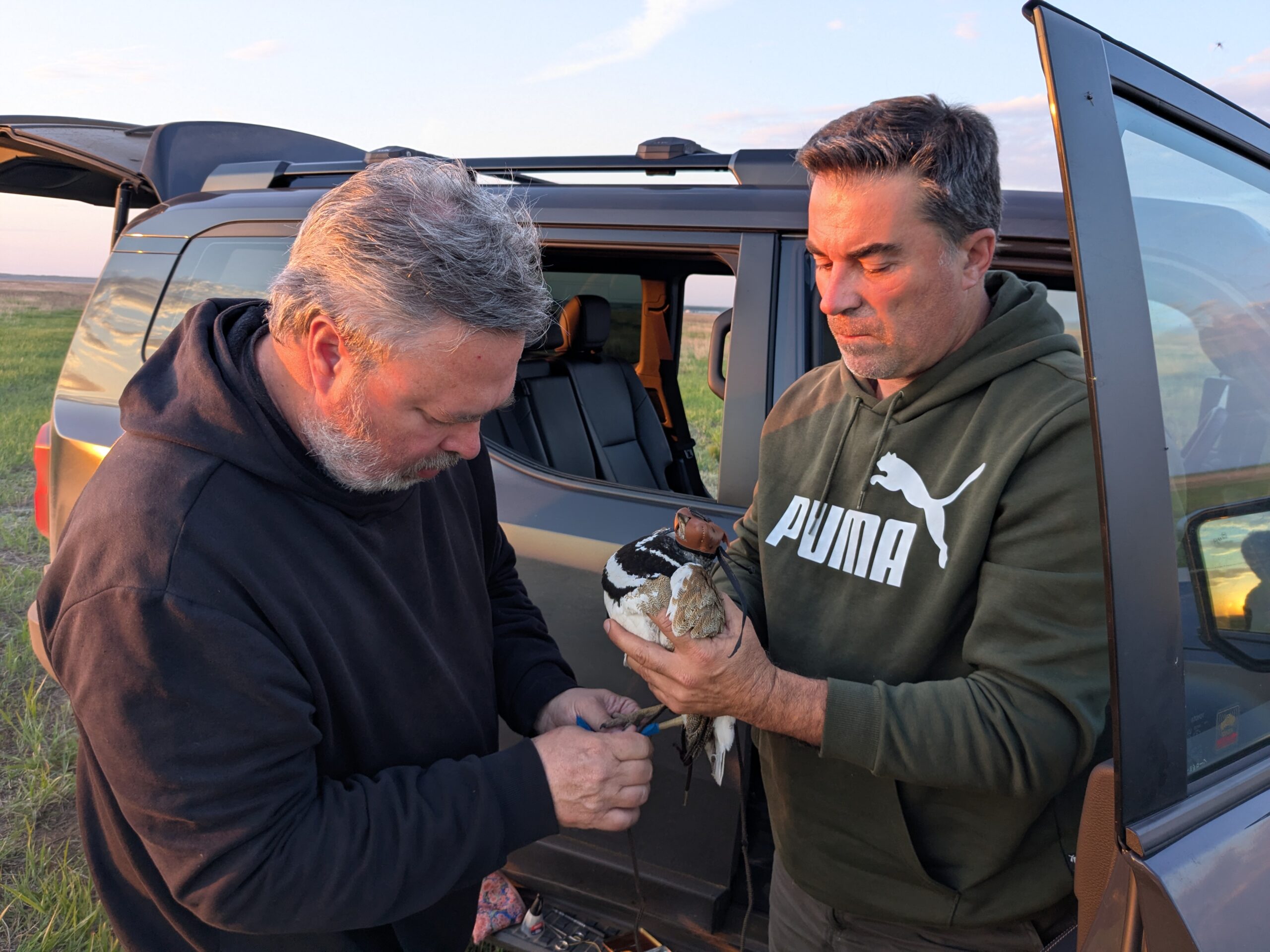
Photo by: Benjamin Rousseau
This tagging initiative will allow researchers to better understand the species' behavior, migration pathways, wintering areas, as well as key threats.
Researchers from the Vernadsky Foundation and BRCC plan to continue studying the biology of the little bustard, aiming for a deeper understanding of its foraging resources and behavioral patterns.
According to Erlan Makazhanov, Director of the Vernadsky Foundation, "Kazakhstan possesses a rich biodiversity, and many of its aspects remain significantly understudied today. This creates immense potential for developing scientific research in the field of biodiversity conservation, which also draws the interest of our international colleagues."
Tagging a little bustard in progress. Photo: E. Makazhanov
 EN
EN  RU
RU  KZ
KZ